Character Lock
A consistent AI fashion model, in every frame of the campaign
One face. Every shot.
Cast a model once and keep them. Character Lock carries the same face, hair and build into every image and clip you make with them, so a campaign reads as one shoot with one person.
01
Why a generated face drifts
An image model draws a new person every time it runs. Describe the same woman twice, word for word, and you get two women who could be cousins. On one picture nobody notices. Across a product page, a lookbook and a paid ad, everybody does.
For a brand this is the whole problem. A front view and a back view with different faces read as two products. A collection shot on a face that shifts from look to look reads as a mood board, not a campaign. Customers learn a brand's cast the way they learn its logo.
A longer prompt does not fix it. Words describe a type of person. They do not identify one. Identity has to travel as pictures of that person, or as a model trained on them.
02
How Character Lock holds one person
Every model in Misu has a Character Set: studio plates of the same person, in the same light, in plain fitted clothes. Four full-body angles, front, three-quarter, profile and back. Three portraits, one of them smiling. One front portrait is the anchor. Every other plate is derived from that anchor, never generated on its own, because a face generated twice is two faces.
When you generate with a locked model, Misu sends plates from that set along with your brief. The anchor always goes first. The rest are ranked against the shot: a back view pulls the back plate, a close portrait pulls the portraits, a walking clip pulls a plate that is already mid-stride. Your garment photo and your own reference pictures keep their place beside them.
A brand's own model can go one step further and be trained. The trained identity is used where a generation model can load it. Everywhere else the Character Set does the work. Both come from the same person, so you choose a model once and never think about which path a shot took.
The body is locked as well as the face. Height, build and measurements are stored on the model and written into every job, because a face reference alone lets proportions slide toward average.
03
Three kinds of face, one lock
Where a model comes from decides how you may use them. The lock works the same way for all three.
Originals
Born-digital models with no real person behind them. Pick one and generate straight away. There is no licensing step.
Main Board
Licensed twins of real models who agreed to it. They are booked by request, never generated self-serve, and each booking has a confirmed scope. The model earns royalties when cast.
Your own model
Upload photos of a person who has given written consent to training and commercial use, and confirm that consent in the wizard. A Character Set needs at least 5 photos and costs 300 tokens. The model stays private to your brand.
A trained identity
Add training to your own model for the deepest lock. Training needs at least 15 photos with consistent light and a mix of angles, and runs on Studio Pro and above.
04
Lock a model for a campaign
01
Cast
Open Talent. Choose an Original, request a Main Board face, or build a model of your own under Exclusive.
02
Check the set
A model's page shows its Character Set plate by plate. Look at the profile and the back before you plan shots that depend on them. Your own model can be rebuilt at any time.
03
Add the garments
Upload product photos or import them from a product URL. In Wardrobe, a locked model is dressed on their own full-body plate, so the outfit lands on the right body.
04
Brief the shoot
Start a campaign: a preset, the products, one line of direction. Character Lock is on by default. Every shot in the set runs with the same model.
05
Take it to video
Animate an approved still, or generate a clip from the model directly. Video models that read several references get the whole set. Models that take one start frame get the plate closest to the shot.
05
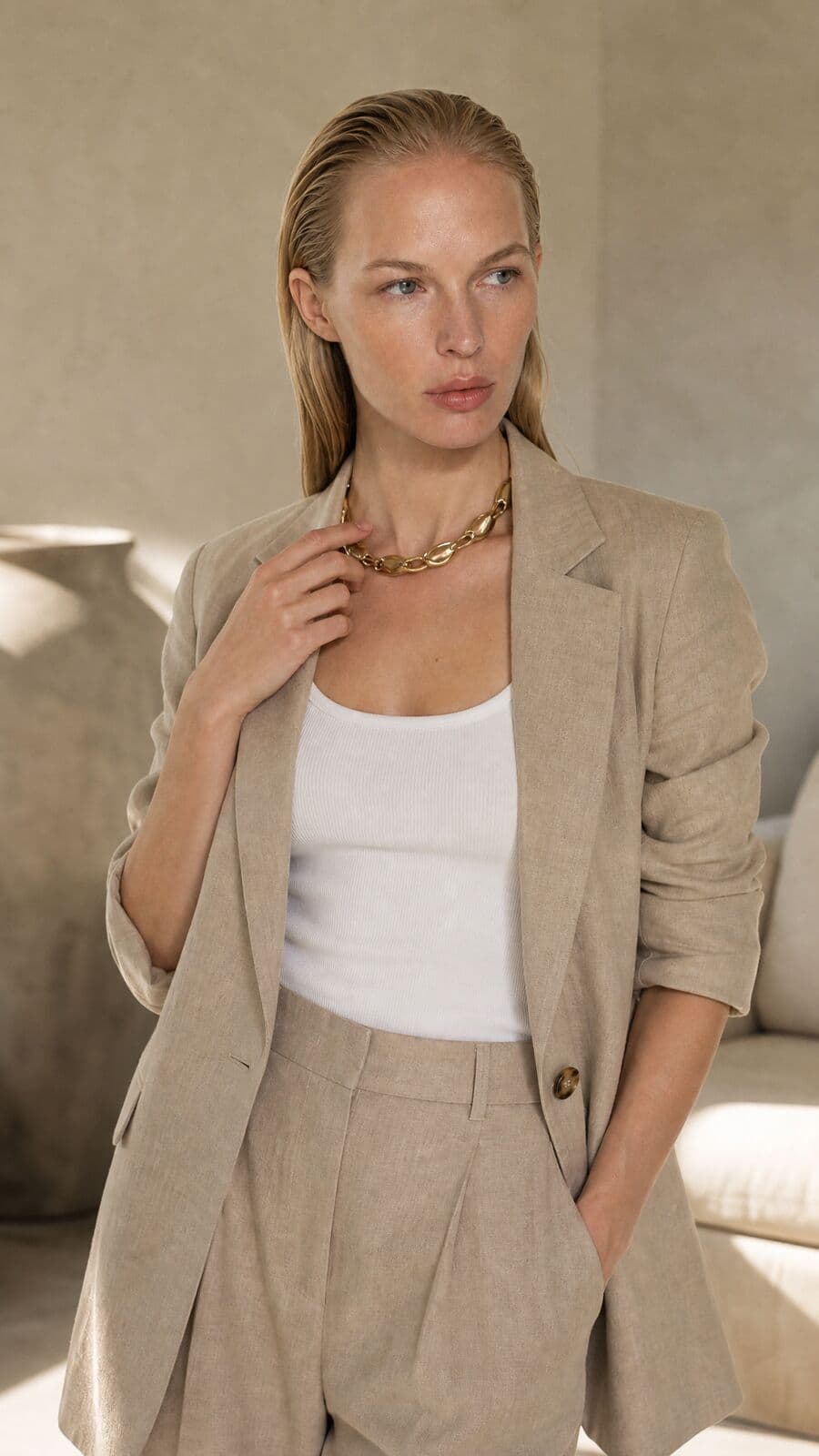
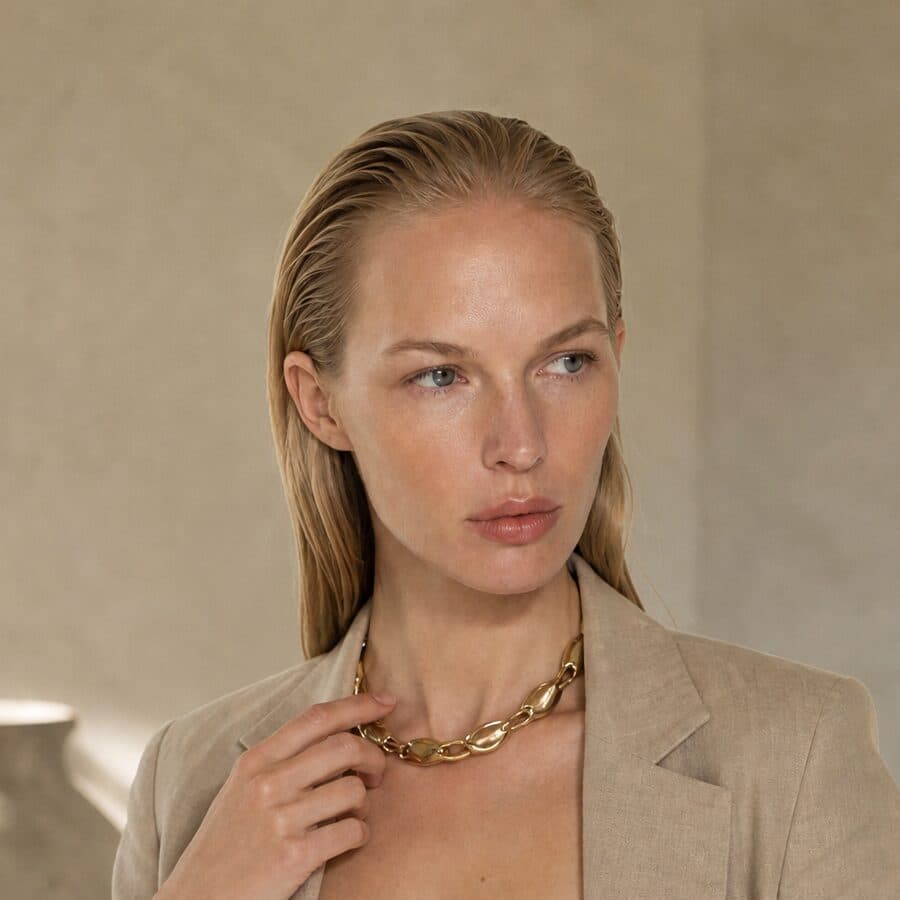
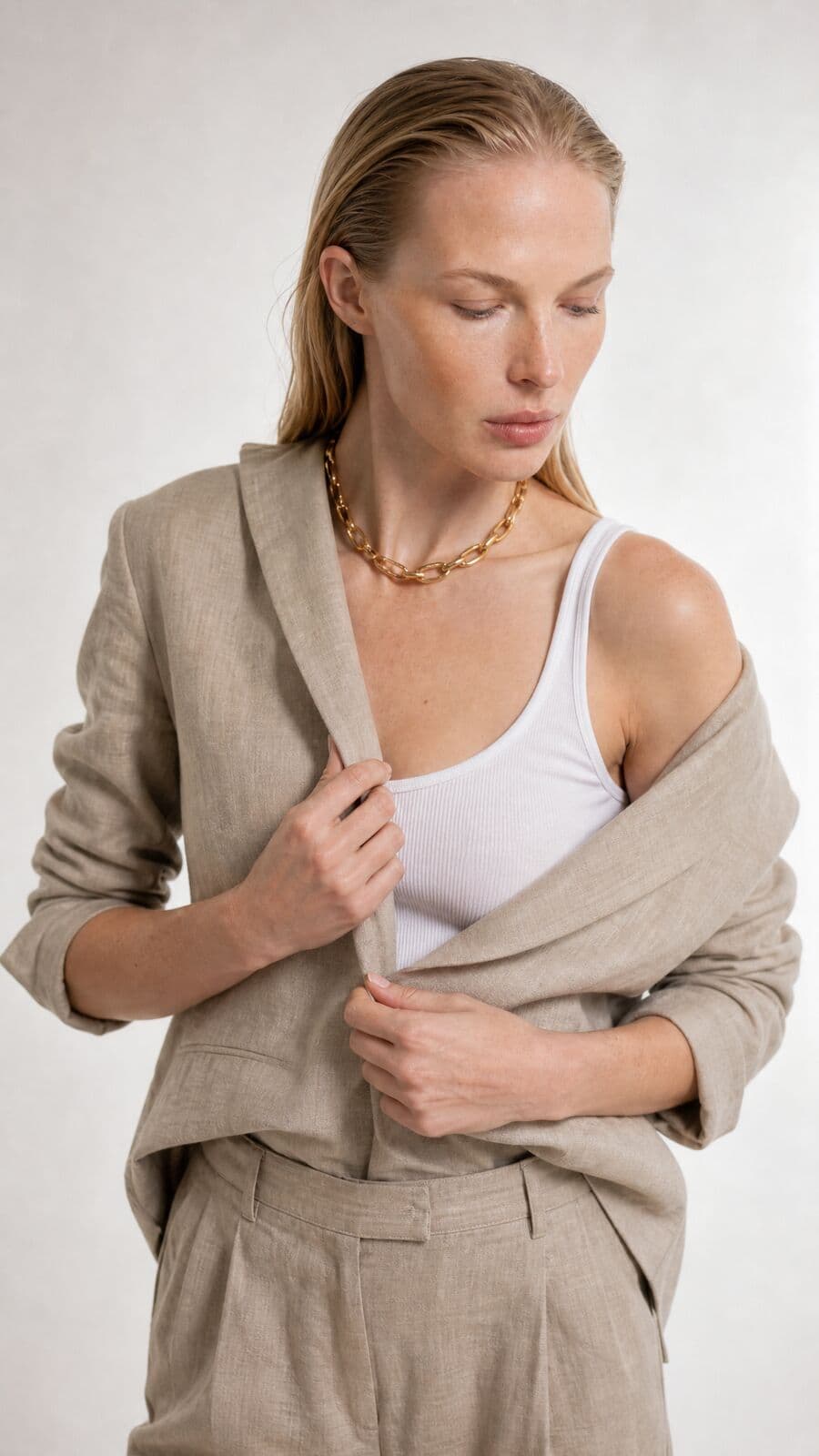
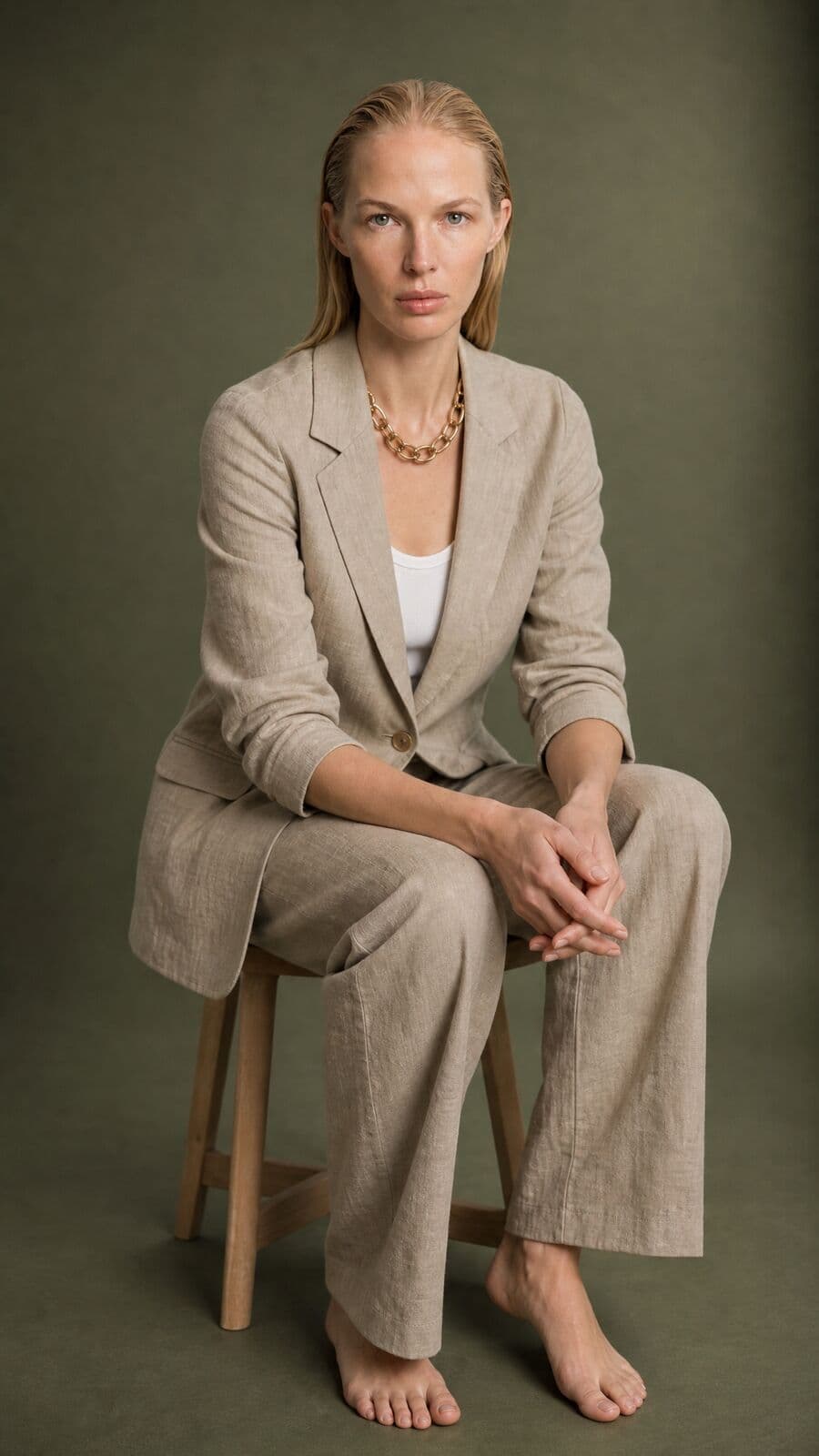
One model. Six frames.
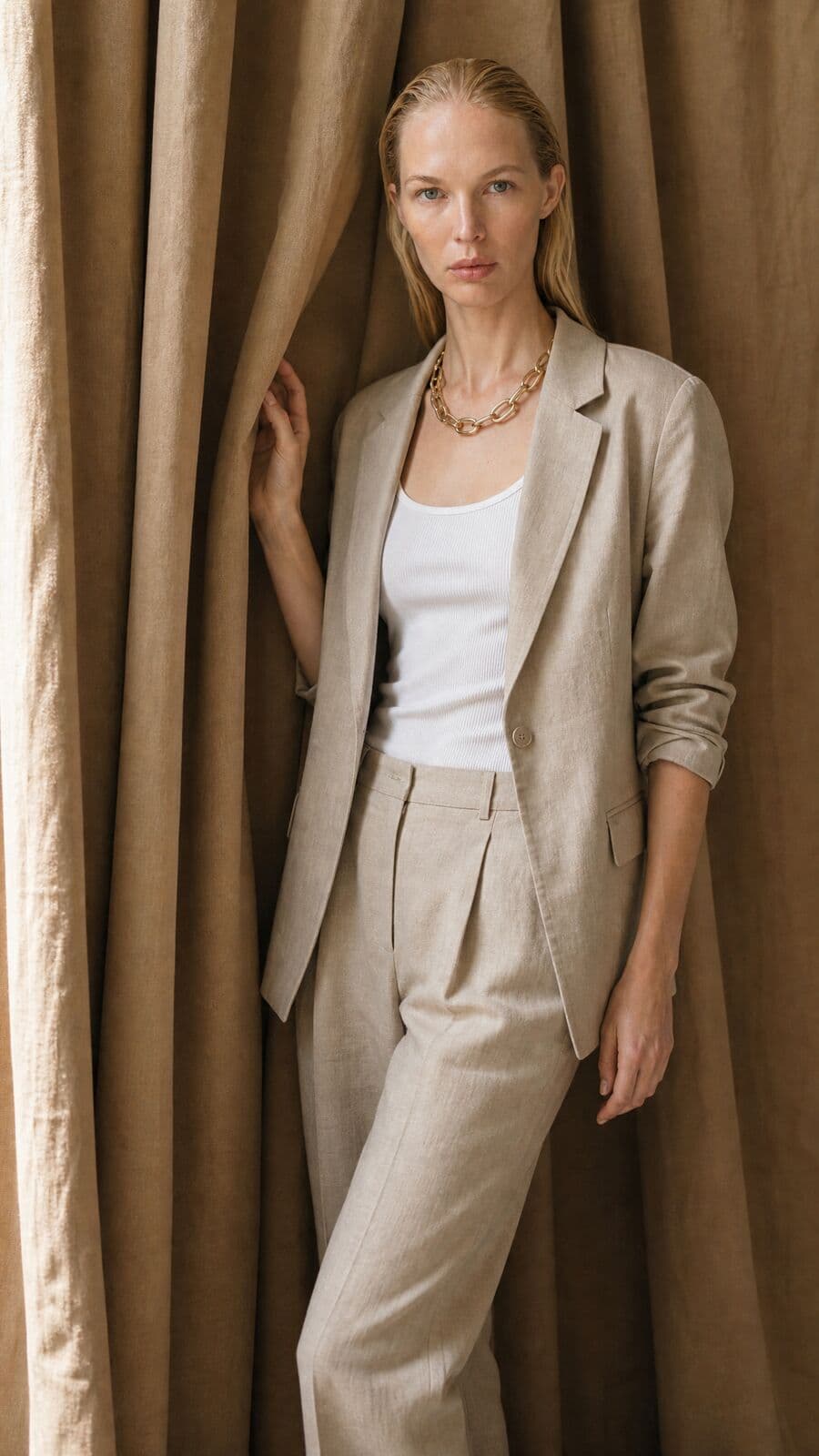
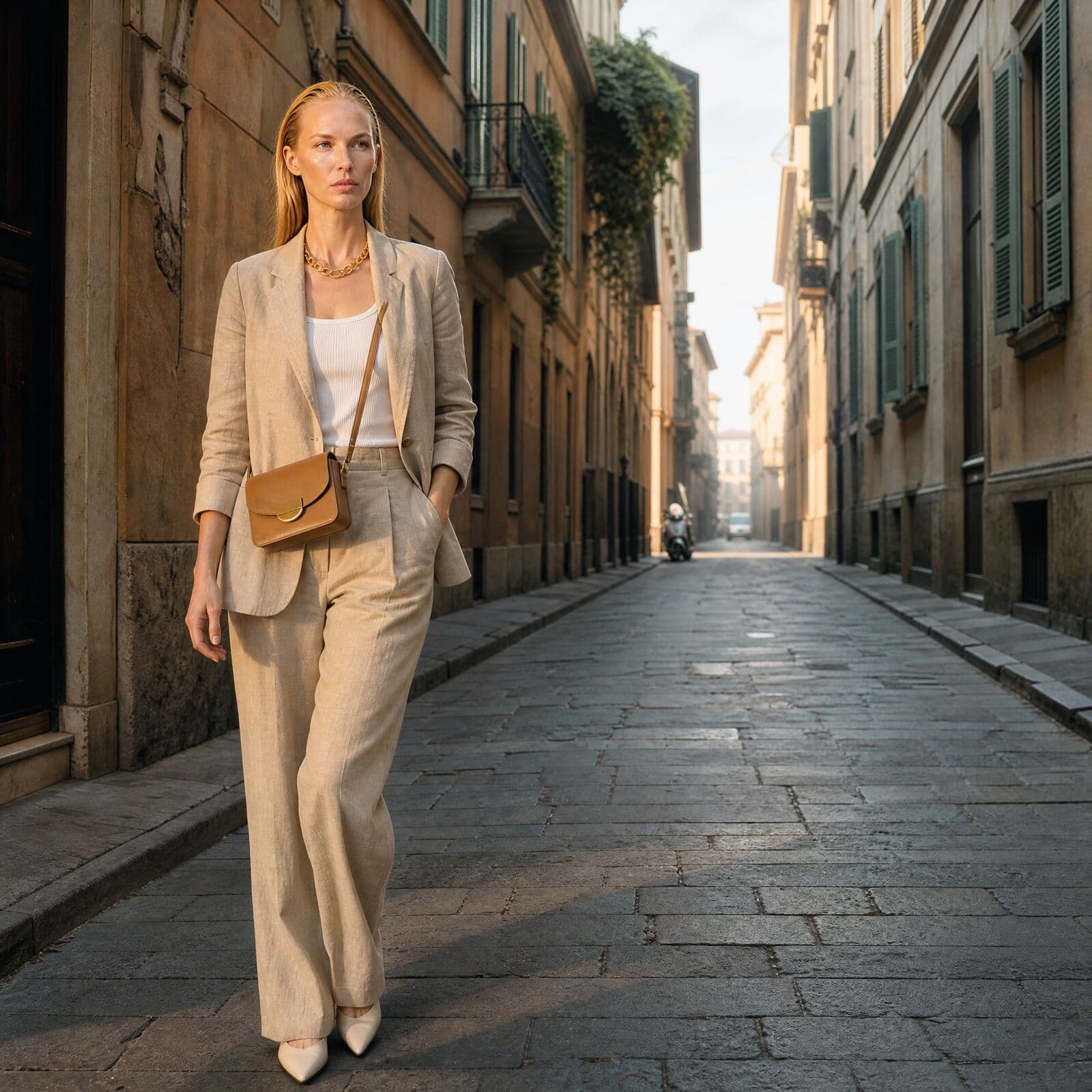
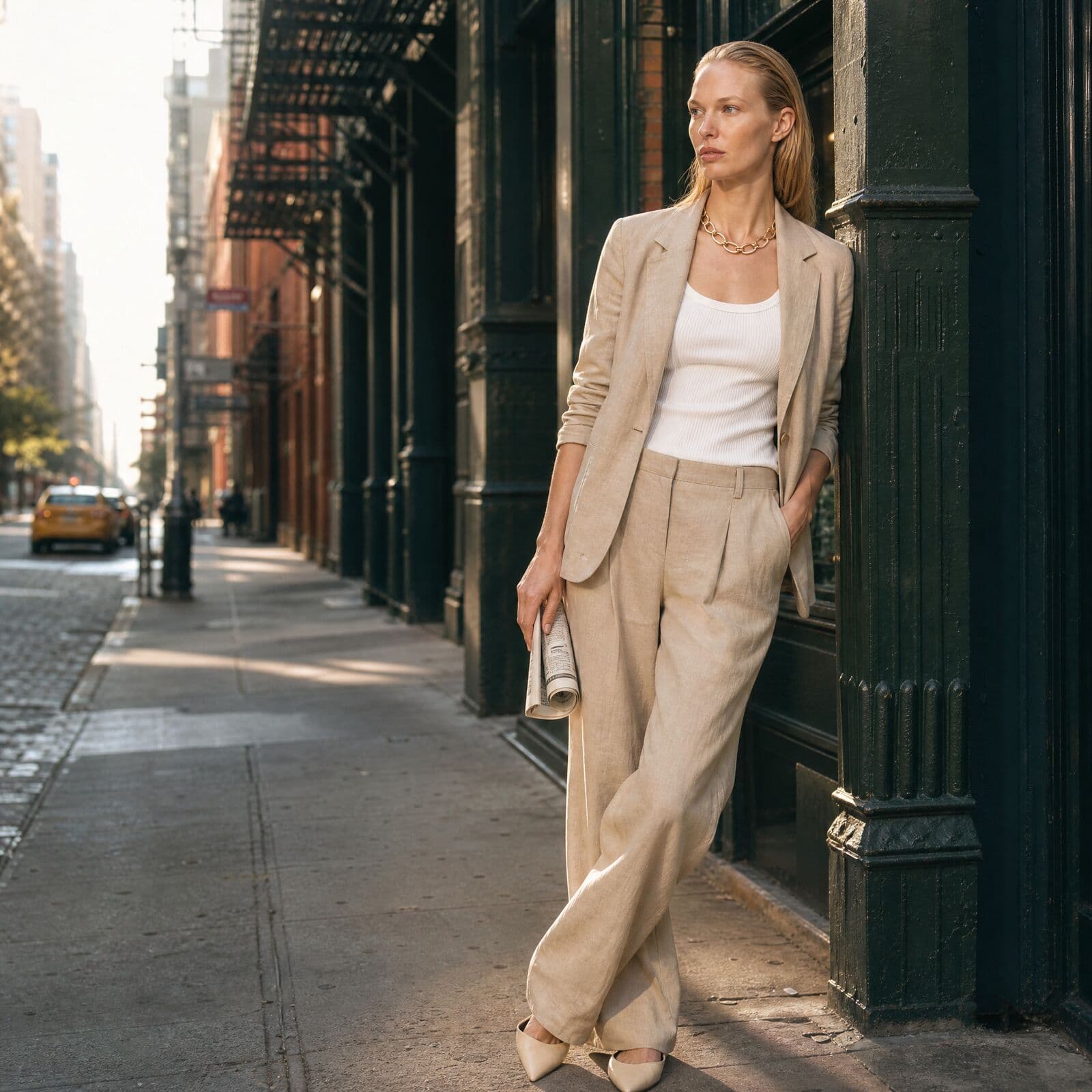
Semona, a Main Board model, in one linen suit across studio, interior and street. Made in Misu with Character Lock. Main Board faces are booked by request.
06
Where the lock holds, and what to check
There is no single consistency score to quote, and we do not publish one. This is what the lock covers, and where a person should still look before a set goes live.
- Face
- What the lock doesThe anchor portrait leads every job, with the plates closest to the shot behind it.
- What to checkHard profiles and extreme angles. If the set has no plate near the angle, the model has to invent it.
- Hair
- What the lock doesColour and texture come from the plates.
- What to checkStyling. A brief that asks for wet hair or an updo changes it, as it would on set.
- Body
- What the lock doesHeight, build and measurements are written into every job.
- What to checkTight crops and seated poses, where proportions are hardest to read.
- Jewellery and props
- What the lock doesNot part of the lock. The lock is the person.
- What to checkA necklace or bag can vary between frames, as the chain does in the gallery above. Add the piece as a product to hold it.
- Garment
- What the lock doesYour garment photo rides along as a reference in every shot.
- What to checkStitching, print and exact colour. Lock the product as well when they must not move.
- Video
- What the lock doesMulti-reference models get the full set. Single-frame models start from the closest plate.
- What to checkMotion the start frame cannot support, such as a full turn from a three-quarter view.
| Criteria | What the lock does | What to check |
|---|---|---|
| Face | The anchor portrait leads every job, with the plates closest to the shot behind it. | Hard profiles and extreme angles. If the set has no plate near the angle, the model has to invent it. |
| Hair | Colour and texture come from the plates. | Styling. A brief that asks for wet hair or an updo changes it, as it would on set. |
| Body | Height, build and measurements are written into every job. | Tight crops and seated poses, where proportions are hardest to read. |
| Jewellery and props | Not part of the lock. The lock is the person. | A necklace or bag can vary between frames, as the chain does in the gallery above. Add the piece as a product to hold it. |
| Garment | Your garment photo rides along as a reference in every shot. | Stitching, print and exact colour. Lock the product as well when they must not move. |
| Video | Multi-reference models get the full set. Single-frame models start from the closest plate. | Motion the start frame cannot support, such as a full turn from a three-quarter view. |
07
Writing for a locked model
Do not describe the person. The plates already carry the face, the hair, the build and the skin tone, and repeating them in the prompt competes with the pictures. Spend the words on what the plates cannot show: pose, camera angle, place, light, wardrobe and props.
Keep your own references few and in agreement. Each generation model reads a limited number of pictures, and the model's plates, your garment and your references share that budget. Two or three well-chosen images do more than ten that disagree.
If a shot needs an angle the set does not have, fix the set first. Rebuild it, or add the video pack: seven more plates of the same person laughing, serious, surprised, pensive, walking, seated, and a close plate of the hands.
Some limits follow the person, not the product. A model built from a real person's photos is not shot in underwear or swimwear. Generation providers can also refuse a real likeness on certain video models. When a render is refused, the tokens come back.
08
Questions people ask
How do I get the same AI model in every photo?
Cast one model and generate every shot with Character Lock on. Misu sends that model's reference plates with each job, with the same anchor portrait first, so the face, hair and build stay fixed while the pose, the place and the clothes change.
What is Character Lock?
Character Lock is how Misu keeps one identity across generations. Each model has a Character Set, a group of studio plates all derived from one anchor portrait. Those plates, and a trained identity where one exists, are attached to every image and video made with the model.
Why do AI models change face between images?
A text prompt describes a type of person, not a specific one, so each run draws someone new. Consistency needs the identity to travel as reference images or trained weights. Without them, small differences in eyes, jaw and hairline appear in every frame.
Does the model stay consistent in video as well?
Yes. Video models that accept several references receive the model's full set. Models that take one start frame open on the plate that best matches the shot. Identity is most at risk when a clip asks for an angle or action the start frame does not show.
Can I keep one model across a whole campaign or lookbook?
Yes. A campaign is briefed once with one model, and Character Lock is on by default for every shot in it. The same model can be cast again next season, so the face on your product pages and the face in your lookbook stay the same person.
Can I create a consistent model from my own photos?
Yes, with the person's written consent to training and commercial use. A Character Set is built from at least 5 photos for 300 tokens. Adding a trained identity needs at least 15 photos and Studio Pro or above. Your model is private to your brand.
Can I use a real model's face?
Only with their agreement. Main Board models are real people who licensed a twin; they are booked by request and used within the scope of the booking. For anyone else, you need their written consent before uploading a single photo. Public figures and faces taken from the internet are not allowed.
How consistent is it, in numbers?
We do not publish a consistency score, because no honest single number exists across every model, angle and shot type. Each plate in a Character Set is checked against its anchor when the set is built, and the set is visible on the model's page. Judge the frames, then approve or redo each one.
Does Character Lock keep the clothes the same too?
No. Character Lock holds the person. The garment is held by its own product photos, which travel as references, and by Product Lock when stitching and colour must be exact. Use both together and the person and the piece stay fixed while the scene moves.
Keep reading
- Fashion photographyAI fashion photography, one face across the collection
- Licensed modelsLicensed AI fashion models, booked like models
- AI model agencyAn AI model agency, run like a model agency
- Campaigns · MoodboardsAI lookbook generator for fashion brands
- WardrobeAI outfit generator for fashion brands
Get started
Your product.
The same face in every shot.
Full commercial rights · Licensed models · Stockholm
Misu is in beta and open to brands, agencies, freelancers and designers. We review every request and email your invite once it's approved, and every new studio starts with welcome credits.
BETA · REVIEWED BY HAND · FOUNDING PRICING LOCKED